
Nothing feels more permanent than a landfill. Yet every day, tons of discarded items—old furniture, broken appliances, obsolete electronics, household clutter—make their way into those massive repositories. But junk doesn’t have to end its life there. By rethinking how we dispose of unwanted items and treating junk as a resource rather than refuse, we can significantly relieve the burden on landfills.
In communities served by efficient junk removal services, such as Mobile Dump Junk Removal, recycling is positioned as a first priority. When junk is collected, the process doesn’t simply move debris from point A to point B; it aims to redirect usable materials, recover valuable components, donate what still has life, and divert volumes from landfill tipping. This is where the simple act of hauling junk becomes an environmental intervention. The choices made at every step—from sorting to drop-off—determine whether waste will be buried or reborn.
Understanding the Problem: Landfills and Their Limits
When you drop something “out of sight, out of mind,” you might be forgetting how landfills operate. These engineered sites are carefully lined, compacted, and monitored, but they are not infinite. Over time, soil, liner materials, and maintenance costs mount. Each new mattress, appliance, or heap of construction debris accelerates filling.
Furthermore, organic materials, foam, and treated wood decompose slowly, leaching chemicals or releasing methane. Even metals and plastics that do not degrade linger, occupying space and interfering with future land use. In many regions, landfill growth has become politically contentious—neighbors resist new sites, regulatory costs increase, and transport distances rise. As landfills expand, so does the carbon footprint of hauling waste farther. Even where landfill capacity remains, the downstream ecological costs are steep.
How Recycling Junk Works in Practice
In theory, “recycle your junk” is simple. In practice, it hinges on a few crucial steps: sorting, partnering, and responsible disposal. First, when junk is collected—whether in a garage clear-out or post-construction cleanup—the removal team inspects every item. Is this piece of metal actually aluminum that can go to a scrap yard? Is that appliance still repairable or repurposable? Can parts be salvaged? Can fabric or wood be shredded, composted, or reprocessed?
Next, the junk removal company funnels different streams to appropriate facilities. Electronics may go to e-waste recyclers, metals to scrap yards, wood and clean lumber to recycling mills or composting operations, and usable furniture to non-profits or thrift outlets. This requires establishing local partnerships with recyclers and donation centers, and knowing which items are accepted. That knowledge turns what could be a messy pile into a set of categorized loads.
Environmental Benefits of Recycling Junk
When junk is recycled instead of dumped, the environment reaps multiple rewards. First, fewer raw materials are extracted or mined. Metal recycling reduces energy consumption and emissions compared to mining and refining ore. Recycling plastic avoids petroleum extraction and lowers greenhouse gas emissions. Reclaimed wood can substitute for virgin timber, which reduces deforestation pressure.
Second, reducing landfill inputs lessens methane generation—especially from organic or composite waste in anaerobic conditions. Landfills emit greenhouse gases, some of which are potent and long-lived; every fraction of decomposable material diverted helps. Third, recycling can reduce pollution from leachate and prevent harmful substances from entering groundwater systems. Electronics and appliances often contain heavy metals or chemicals; diverting such items to specialized recyclers minimizes the risk of leachate contamination.
Economic and Social Advantages
Beyond environmental effects, recycling junk has economic and social upsides. Diverting materials to recyclers and donation centers supports local businesses: scrap yards, refurbishers, and secondhand stores. This job creation can be especially meaningful in the downstream supply chain of reuse and refurbishment.
For individuals and communities, recycling junk tends to lower disposal costs. Landfilling is expensive at the margin; tipping fees can rise or shift to remote sites, increasing haulage costs. In contrast, recycling and donation channels can absorb portions of the waste stream more cheaply or subsidize disposal, which can yield savings to customers of junk removal services.
Challenges and Misconceptions
The path of recycling junk is not free of obstacles. One common misconception is that all junk is recyclable. In truth, contamination, mixed materials, and composite construction complicate recycling. Items glued with adhesives, coated with hazardous paint, or combining multiple differing materials may not be recoverable as a single stream. This is why careful sorting and separation at collection is essential.
Logistics and regulation add further complexity. Some landfill sites or transfer stations have strict rules about which materials can be accepted. Some recyclers have limited capacity or reject small, low-value items. Transportation distances and fuel costs may erode the advantage of recycling certain materials. Also, local regulations or infrastructure constraints (especially in more rural areas) may limit recycling options.
Role of Junk Removal Companies
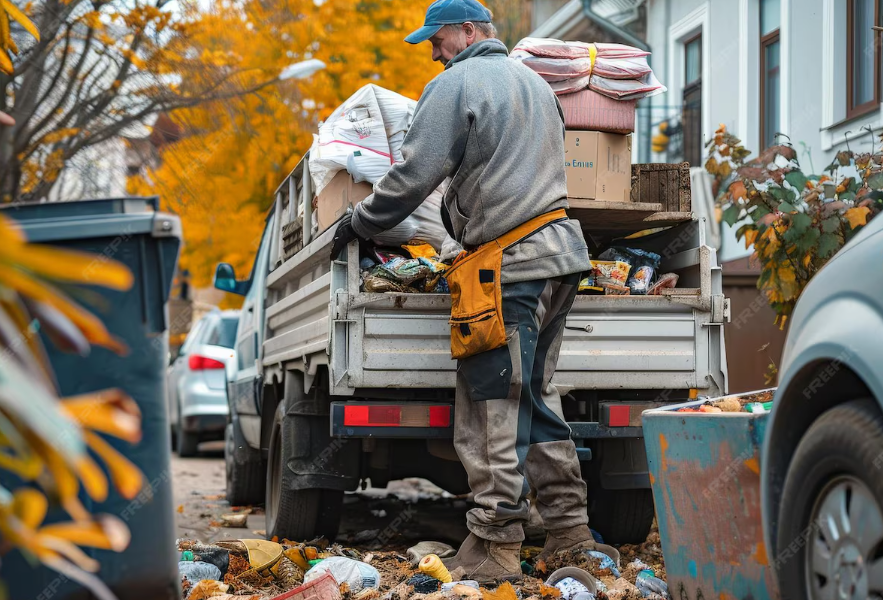
This is where companies like Mobile Dump Junk Removal matter. Instead of offering undifferentiated hauling, responsible providers make recycling an integral feature of the service. When customers call for debris removal or cleanout, the company sends crews not just with trucks, but with protocols: examine each item, classify materials, segregate what can be salvaged, and transport each stream to the right facility or charity.
Such services relieve customers from the burden of figuring out drop-off locations, sorting rules, and transport logistics. They also reduce the risk of improper disposal. Because these companies have relationships with recyclers and are familiar with local regulations, they can streamline the flow from collection to recycling. The result is that fewer items default to landfill.
Measuring Success: Metrics and Outcomes
To prove that recycling junk reduces landfill waste in meaningful terms, one must track metrics. Volume diverted is a primary measure: how many cubic yards or tons of materials were directed to recycling instead of landfill. Weight is another dimension, particularly for dense materials like metals. Recycling rate—percentage of the total waste stream diverted—is a key performance indicator.
Over successive years, improvements in these metrics show the cumulative impact of recycling junk. What begins as small percentages can scale into significant reductions in landfill throughput. In some service areas, junk removal firms report diversion rates over 50 percent for their loads when paired with local recycling infrastructure. The broader the set of recyclable streams (wood, metal, electronics, textiles), the higher the potential diversion.
Case Study Sketch: Local Impact
Consider a suburban neighborhood served by a junk removal company. A homeowner contracts a cleanout of an old garage full of broken furniture, scrap wood, an old refrigerator, and miscellaneous metal scraps. Without recycling, the entire load might be compacted and delivered to a landfill.
But instead, crews arrive and separate the metal scrap and donate the working refrigerator to a charity. Clean wood boards are taken to a local sawmill or compost facility, and mixed materials are sorted as feasible. The residuals—painted, composite pieces and broken glass—go to landfill. The result: only 30 percent of the original volume ends up in a landfill. That’s 70 percent diverted—saving tipping fees, extending landfill life, and reducing environmental burden. Multiply that across dozens of jobs per week, and the impact scales.
The Broader Vision: Circular Waste Management
Recycling junk is part of the larger ambition of circular waste management. In a circular model, materials continuously loop back through reuse, refurbishment, remanufacturing, and recycling instead of ending in a linear “take, make, dispose” model. When junk removal firms push upstream—prioritizing salvage and proper recycling—they reinforce circular economy principles.
As public awareness grows, manufacturers may feel pressure to design products for disassembly, easier recycling, and longer life. Consumers may prefer goods with lower end-of-life cost or those with take-back programs. Municipalities may invest more in recycling infrastructure, material recovery facilities, and regulatory incentives. The role of junk removal becomes not just hauling but material stewardship.
Potential Risks and How to Mitigate Them
Recycling junk is powerful, but it must be done responsibly to avoid unintended harm. One risk is exporting e-waste or materials to low-standard processors overseas, where labor or environmental safeguards are weak. A responsible junk removal company must verify that recyclers follow proper environmental and labor standards.
Another risk is greenwashing—claiming that “everything” is recycled when it is not. Transparency is critical: providers should disclose how much of each load they divert. If only a small fraction can be recycled, that should be clear to customers. Also, contamination (mixing hazardous waste or non-recyclables) can degrade entire batches and push materials into landfill. Proper sorting and handling protocols must be enforced.Finally, recycling markets fluctuate. Some materials may lose value or become uneconomical to process, forcing more to landfill than expected. Because of that, recycling must be paired with reduction and reuse strategies to ensure long-term effectiveness.
The Role of Policy, Infrastructure, and Community in Scaling Impact
Recycling junk is not only about individual service providers; it also requires supportive systems. Municipal policies—such as landfill bans for electronics or mattresses, incentives for recycling, deposit-refund systems, and mandates for green procurement—create demand for recycled materials and ensure more items find proper channels.
Infrastructure matters too: material recovery facilities, local e-waste processors, wood recycling mills, and donation networks must exist and remain accessible. If the nearest recycler is too far or unwilling, diversion efforts struggle. So local government investment and zoning that encourages recycling facilities is crucial.
Conclusion
Recycling junk does more than tidy a property—it strikes at the heart of landfill overload. Every time a removal crew sorts metals, refurbishes appliances, repurposes furniture, or redirects wood to recycling, less waste ends up buried, emissions are trimmed, and resources live on. While challenges remain—contamination, logistics, regulatory gaps, market volatility—the potential upside far outweighs the friction.
Mobile Dump Junk Removal, based in Ventura, CA, embodies that mission: reducing landfill waste by recycling and donating whenever feasible. For residents and businesses in the Ventura area seeking responsible junk removal, call (805) 751-3744 or email mobiledumpremoval@gmail.com to schedule a cleanup that works for your space and the planet.