
In a world constantly producing, consuming, and discarding, the concept of a circular economy stands as a quiet revolution. It challenges the idea that resources have a single purpose or a linear life span. Scrap metal, often dismissed as useless debris, becomes the starting point of transformation. Instead of rotting in landfills or rusting away in forgotten corners, metal is reborn through recycling, reentering the economy as something new.
The process begins when discarded materials are gathered, sorted, and refined, forming a loop that avoids unnecessary waste. Every piece of recycled metal becomes a statement against the culture of disposal. It’s proof that materials can have a second, third, or even fourth life. Through this process, society starts to untangle itself from the heavy chains of excess and waste.
The Hidden Value Within Scrap Metal
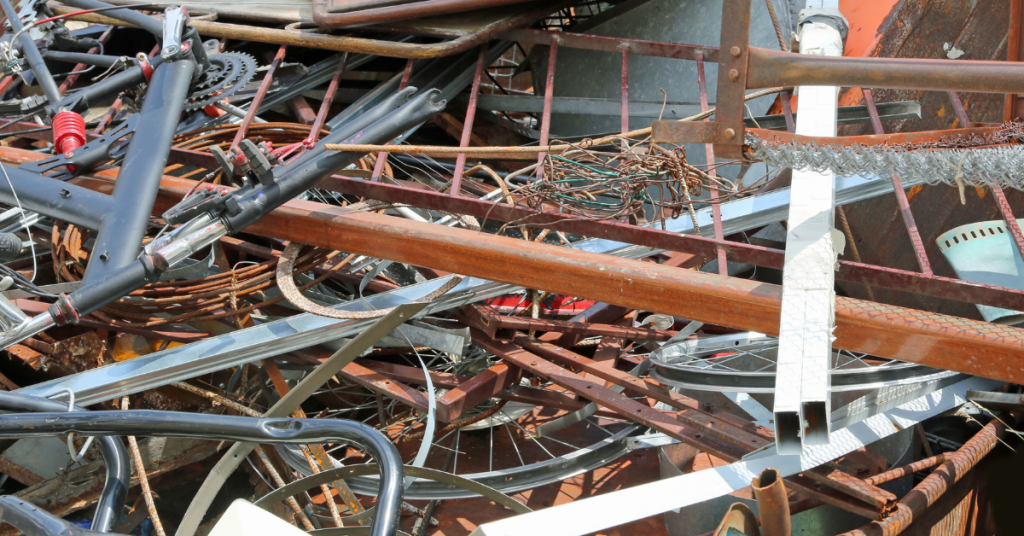
What may look like a pile of rusted steel or aluminum is actually a mine of economic potential. Beneath the grime and corrosion lies value—tangible, renewable, and powerful. Every nut, bolt, and fragment holds the possibility of rebirth. When these materials are reclaimed, melted down, and reshaped, they find new purpose in manufacturing, construction, and technology. The process transforms what would have been discarded into a critical resource that sustains industries and communities alike.
For businesses and households, understanding this hidden worth changes perspectives. Scrap metal isn’t waste—it’s an untapped asset waiting to be harnessed. By contributing to recycling efforts, individuals and companies not only reduce environmental strain but also strengthen the financial backbone of local economies. The simple act of recycling becomes a shared investment, one that multiplies its return through cleaner production, job creation, and the steady pulse of sustainable commerce.
The Ripple Effect of Recycling on Local Economies
The influence of scrap metal recycling reaches far beyond the confines of processing facilities—it reverberates through entire communities. When industries depend on reclaimed metals, they create a demand that fuels local employment and stabilizes regional markets. Transporters move materials between sites, sorters and processors handle the intricate stages of transformation, and manufacturers give recycled metal new life in products that drive modern living. Each role forms part of a vast, interconnected network where sustainability and commerce meet. This system doesn’t just manage waste—it sustains livelihoods and builds resilience within the economy.
By recycling, households and businesses unknowingly become investors in this cycle. Every ton of metal they divert from landfills contributes to job creation, reduced import reliance, and lower production costs. These contributions accumulate, nurturing cleaner industries that generate steady growth without exploiting natural reserves. Scrap metal recycling transforms communities into participants in a circular system where economic stability and environmental care evolve hand in hand.
Energy Conservation Through Metal Recovery
One of the most overlooked truths about scrap metal recycling is its impact on energy preservation. The production of metal from raw ore demands massive energy consumption, from mining to refining to transportation. In contrast, recycling metals uses significantly less power. For instance, producing aluminum from recycled materials consumes about ninety-five percent less energy than extracting it from bauxite. That’s not a minor improvement—it’s an environmental milestone that reshapes industrial responsibility.
Every ton of recycled steel, copper, or aluminum reflects megawatts of energy saved and tons of emissions prevented. It’s like the earth gets to breathe easier with each cycle of reuse. The process trims down pollution, reduces greenhouse gases, and alleviates the heavy toll of mining on delicate ecosystems. The ripple effect reaches beyond factories and furnaces, influencing global energy strategies and marking a path toward a future fueled by efficiency rather than exploitation.
Redefining Waste Management and Urban Responsibility
Modern cities are suffocating under the weight of their own consumption. Landfills grow taller, streets hide forgotten scrap, and disposal costs rise as space diminishes. Scrap metal recycling steps in as both a solution and a statement—a declaration that urban growth doesn’t have to mean environmental decay. Through proper recycling practices, metals are extracted from the waste stream, extending the lifespan of existing resources while reducing landfill dependency.
Municipal systems benefit from reduced waste volumes and lower cleanup costs, while residents experience cleaner neighborhoods and healthier air. The more effectively scrap metal is recycled, the less strain falls on local waste infrastructure. It’s a system of shared accountability, where every participant—citizens, junk removal companies, and industries—plays a role. In the circular economy, urban sustainability is no longer a dream but a discipline shaped by consistent, collective action.
The Role of Innovation in Recycling Systems
Technology has become the heartbeat of modern recycling. What once required manual labor and rough sorting has evolved into a sophisticated process powered by automation and precision. Advanced sensors, magnetic separators, and AI-driven machinery now identify and classify metals with remarkable accuracy. This evolution ensures that every fragment is repurposed efficiently, reducing contamination and maximizing output.
Innovation doesn’t stop at processing. New techniques in smelting, alloy purification, and material tracking are redefining the boundaries of recycling. Even data plays a role, allowing companies to monitor environmental impact in real time. These technological strides turn recycling from a simple mechanical process into a high-performance system that mirrors the best of industrial engineering. As technology continues to advance, the recycling industry grows not just cleaner, but smarter, reinforcing its place as a cornerstone of the circular economy.
Economic Growth Rooted in Sustainability
The circular economy thrives on connection—the link between resource recovery and renewed opportunity. Recycling metals generates employment, supports local enterprises, and fuels small-scale industries that depend on affordable raw materials. Every shipment of recycled metal sustains jobs in transportation, sorting, processing, and manufacturing. These economic ripples reach far beyond recycling facilities, touching communities and industries that rely on consistent material flow.
The beauty of this system lies in its stability. Unlike the volatile markets of raw extraction, recycled resources offer continuity and balance. Businesses can plan production around dependable material supplies, while consumers enjoy products created through ethical sourcing. Sustainability, once considered a costly burden, transforms into a driver of growth. It aligns profitability with responsibility, building a marketplace that rewards environmental consciousness as much as it does innovation.
Environmental Renewal and Resource Preservation
Mining is not just expensive—it’s destructive. Every ton of ore extracted from the ground leaves scars on landscapes, destroys habitats, and consumes precious water. Scrap metal recycling interrupts this cycle of damage by reducing the need for virgin material. When metals are reused instead of mined, forests remain intact, soil remains fertile, and rivers flow cleaner. Each recycled item becomes a symbol of restraint and renewal.
Beyond conserving nature, the process safeguards the planet’s finite resources. Metals such as copper, nickel, and aluminum are not infinite; their availability depends on responsible management. Recycling ensures that these materials remain in circulation rather than depletion. It’s an ongoing act of environmental stewardship, balancing industrial demand with ecological preservation.
Building a Culture of Circular Thinking
True sustainability isn’t achieved through technology alone—it requires a shift in mindset. The circular economy begins at home, with awareness and daily habits. When individuals separate scrap metal from general waste or choose to work with eco-conscious disposal services, they contribute to a global movement. Every small action becomes part of a collective rhythm that challenges the disposable culture of modern society.
Education plays a powerful role in shaping this awareness. Communities that understand the value of recycling foster a sense of pride and participation. Businesses that emphasize environmental accountability inspire others to follow suit. The circular economy grows not from mandates but from shared conviction, where the idea of endless reuse becomes as natural as consumption once was. It’s a culture of balance—one that replaces wastefulness with wisdom.
The Link Between Junk Removal and Recycling Efficiency
The journey from cluttered spaces to resource recovery often starts with junk removal. Professional services specializing in eco-friendly collection bridge the gap between households and recycling facilities. They don’t just haul away debris—they ensure materials reach the right destinations for processing. When scrap metal is properly separated at the source, the recycling chain becomes smoother, faster, and more effective.
Efficient junk removal reduces contamination, lowers transport emissions, and minimizes landfill diversion rates. It creates a direct pipeline from the consumer to the recycler, maintaining the purity of recyclable materials. This coordination between collection and recycling mirrors the circular economy itself—a seamless loop that transforms waste into worth. In this connection lies the heart of progress: organization meeting sustainability, service meeting science, and action meeting purpose.
A Future Forged From Reuse and Responsibility
If the linear economy is a straight road toward exhaustion, the circular economy is a living circle that never ends. Scrap metal recycling serves as one of its most tangible examples—a system where what was once discarded becomes the raw ingredient for tomorrow. It reflects a mindset where environmental care is not a secondary act but the foundation of progress.
The future depends on industries, consumers, and governments embracing this loop fully. As awareness grows and technology advances, recycling will evolve from an environmental necessity to a defining feature of civilization’s next era. It represents a future forged not in excess but in intention, not in exploitation but in renewal. The story of metal is no longer about extraction; it’s about endurance.
Conclusion
Every piece of recycled metal tells a story—of rebirth, resilience, and responsibility. The circular economy depends on choices that favor regeneration over depletion, care over convenience. Recycling is not a task confined to factories or industries; it is a shared commitment that keeps communities clean, resources circulating, and the planet breathing a little easier.
For those ready to play their part in this cycle, Mobile Dump Junk Removal offers responsible scrap metal collection and recycling services rooted in sustainability. Serving Ventura, CA, the team can be reached at (805) 751-3744 or via mobiledumpremoval@gmail.com. Together, they help transform discarded materials into meaningful change, one load at a time.